SCIF, 8일 두 건의 게시물에서 한국 부정선거 의혹 저격
“투표지 분류 하드웨어에 숨겨진 장치, Wi-Fi 해킹 의혹”
“러시아가 아닌 중국이 美 선거 위협 트럼프 발언과 동일”
“A-WEB과 연계된 미루시스템즈가 문제라는 비판 있어”
“단지 한국만 아닌 전 세계적 글로벌 선거 부정 카르텔 탓”
“한국은 전 세계적 네트워크로 투표 조작하는 카르텔 일부”
시민단체 부정선거 주장에 정부가 고발자 상대 법적 조치
민경욱 “선거 조작 국민들에게 들켰다는 사실 알기 때문”
맷 슐랩 “尹, 대한민국 선거제도 화웨이가 운영한다 답해”
“中기술이 한국 선거 결과 결정에 사용… 격노할 일” 폭로
중국 화웨이의 기술이 중국의 다국적 선거 개입을 가능하게 했다는 미국 부정선거 추적 전문 소셜미디어(SNS)의 폭로가 나와 사실 여부가 주목된다. 미 SCIF(@TheSCIF)는 8일(현지시간) X(엑스·옛 트위터) 계정을 통해 “화웨이 기술은 중국의 선거 개입을 가능하게 한 혐의가 있다”며 이같이 밝혔다.
구체적으로 이 계정은 “2020년 한국 국회의원 선거 당시 투표지 분류 하드웨어에 숨겨진 장치와 2025년 대선 및 보궐선거에서 해킹을 암시하는 Wi-Fi 시그널 등이 있다”며 부정선거.부패방지대 등 부정선거 감시 단체를 지칭하는 듯 “활동가들은 비밀 코드가 특정 정당에 유리한 결과를 낳는다고 주장했다”고 했다.
그러나 계정은 “선거당국 관리들은 이 같은 주장이 근거없다고 일축했으며 선거 방해 세력으로 싸잡으며 불만을 토로했다”며 “백악관은 2025년 한국 대선 여론조사에서 중국의 영향력에 대한 우려를 표명했으며 화웨이와의 연계성을 직접 시사하진 않았다”고 부연했다.
그러면서 “한국의 보수 비평가들은 4월 총선들에서 광범위한 (선거) 사기가 발생했다고 의심하고 있다”며 “‘전산에 의한 결괏값 조작(electronic distortions)’과 ‘우편에 의한 부정 투표(mail-in irregualrities)를 들면서 당시 여당이 중국의 도움으로 의회의 다수석을 차지했다고 주장하고 있다”고 직격했다.
SCIF는 게시물에서 ‘4월 총선들(April elections)’이라고 복수로 표현했다. 이 가운데 하나는, 여당이 다수석을 차지한 선거라는 표현으로 미뤄 문재인정부에서 치러진 2020년 4월15일 총선을 의미하는 것으로 보인다.
계정은 또 “이 같은 의혹 제기가 도널드 트럼프 대통령과 연방 법무부가 러시아가 아닌 중국이 미국 선거에 위협을 주고 있다는 주장과도 궤를 같이 한다”며 “페이스북은 트럼프와 바이든(의 부정선거 논란)을 겨냥한 중국 연계 페이지들을 삭제한 바 있다”고 지적했다.
특히 “부정선거 논란은 2020년 5월 월터 미베인 교수가 한국 총선은 부정선거라고 발표한 이후 더욱 확산됐다”며 “미베인 교수의 논문은 잠재적으로 선거 결괏값을 바꾼 (선거) 사기의 통계적 증거를 제시한 바 있다”고 덧붙였다.
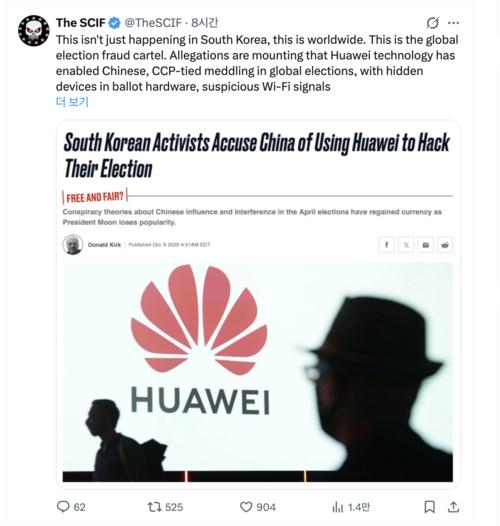 미국 부정선거 추적 전문 소셜미디어(SNS) SCIF(@TheSCIF) 게시물 캡처.
SCIF는 같은 날 또 다른 게시물에서도 한국을 거론하면서 “이 일은 단지 한국에서만 일어나는 것이 아니다. 이것은 전 세계적인 현상이고 글로벌 선거 부정 카르텔”이라고 강조했다.
이와 관련해 KBS 워싱턴 특파원과 앵커에 이어 박근혜 정부에서 청와대 대변인을 지낸 민경욱 전 미래통합당 국회의원(국민의힘 전신)은 9일(한국시간) 오전 페이스북에 올린 글에서 ‘부정선거’라는 의혹 제기에 대해 선거 당국이 근거 없는 주장이라고 일축하고 오히려 고발자들을 상대로 법적 조치를 취한 배경과 관련해 “왜 그럴까? 선거를 조작하던 사람들이 국민에게 들켰다는 사실을 알기 때문”이라며 “사람들이 눈치채기 시작했다”고 SCIF의 두 번째 게시물 내용을 전문 번역해 공개했다.
민 전 의원이 이날 공개한 번역 전문에 따르면 SCIF는 “이는 고립된 사건이 아니라 전 세계 기술 기업들의 네트워크를 이용해 투표 결과를 조작하려는 어두운 ‘선거 부정 카르텔’의 일부라는 주장도 있다”며 “한국에서는 세계선거기관협의회(A-WEB)와 연계된 주요 기업인 미루시스템즈가 문제가 된 투표 기술을 해외로 수출했다는 비판이 있다”고 방점을 찍었다.
아울러 “이라크의 2018년 선거에서는 미루 장비 때문에 부정 의혹이 제기돼 수작업 재검표가 진행됐고 창고 화재 사건까지 발생했다”며 “콩고민주공화국의 2018년과 2023년 선거에서도 이 장비는 ‘부정 기계’라는 비난 속에 대규모 시위와 뇌물 수사로 이어졌다”고 했다.
이와 함께 계정은 “같은 패턴과 같은 결과가 반복되고 있으며 사람들도 이를 인식하기 시작하고 있다”고 거듭 강조했다.
민 전 의원은 페이스북에 “SCIF가 대한민국의 선거에 중국이 개입했다는 정황을 폭로한 것이 주는 교훈은 다음의 한 마디”라며 “투표 집계를 통제하면 국가를 통제할 수 있다는 것”이라고 일갈했다.
한편 맷 슐랩 미국보수연합(ACU) 회장 겸 보수정치행동회의(CPAC) 공동의장은 지난해 3월 자신의 SNS에 “제가 서울에 가서 윤석열 대통령을 만나 그의 입장을 들었다”며 “중국의 기술이 한국의 선거 결과를 결정하는 데 사용된다는 것은 격노할 일(It's an outrage)”이라고 폭로한 바 있다.
탄핵 가결 직후 한남동 대통령 관저를 예방한 슐랩 의장은 “대한민국의 선거제도는 누가 운영합니까?(Who runs your elections?)”라고 두 번이나 질의했는데도 침묵을 지키던 윤 대통령이 세 번이나 거듭된 질문에 “(중국) 화웨이”라고 답했다고 밝혔다.
다음은 민경욱 전 국회의원의 SCIF 게시물 번역 전문
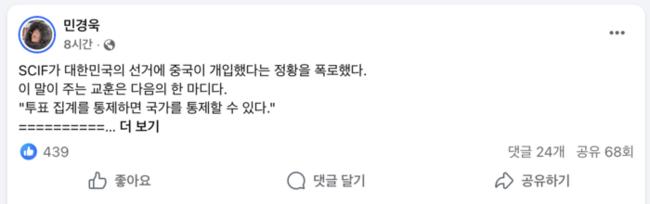 민경욱 전 국회의원이 3월9일 페이스북에 올린 게시물. [민 전 의원 페북 캡처]
이 일은 단지 한국에서만 일어나는 것이 아니다. 이것은 전 세계적인 현상이다. 이것은 글로벌 선거 부정 카르텔이다. 화웨이 기술이 중국 공산당(CCP)과 연계된 세력의 전 세계 선거 개입을 가능하게 했다는 의혹이 점점 커지고 있다. 투표 장비 안에 숨겨진 장치들, 해킹을 암시하는 의심스러운 와이파이 신호들, 특정 정당에 유리하도록 결과를 기울이게 했다는 비밀 코드 등이 그 근거로 제시되고 있다.
한국의 2020년 국회의원 선거와 2025년 재보궐 선거에서 활동가들은 이러한 전술을 지적했다. 그러나 당국은 이를 근거 없는 주장이라고 일축하고, 오히려 고발자들을 상대로 법적 조치를 취했다.
왜 그럴까? 선거를 조작하던 사람들이 국민에게 들켰다는 사실을 알기 때문이다. 사람들이 눈치채기 시작했다. 백악관도 2025년 미국 선거에서 베이징의 영향력에 대한 광범위한 우려를 표명했지만, 화웨이와의 직접적인 연관성까지는 언급하지 않았다.
한국의 보수 진영 비판자들은 2024년 4월 국회의원 선거에서 광범위한 부정이 있었다고 주장한다. 전자 장비 오류, 우편투표의 이상, 그리고 집권당의 압승 뒤에 중국의 지원이 있었다는 주장이다. – Japan Forward
이러한 주장들은 중국이 러시아보다 미국 선거의 무결성에 더 큰 위협이 된다는 트럼프 행정부 시절 미 법무부의 경고와도 맥을 같이 한다. – CNN
페이스북은 트럼프와 바이든을 겨냥한 중국 연계 페이지들을 삭제했으며, 2020년 5월 미시간대의 월터 메베인 교수 연구는 한국 선거에서 통계적 이상 현상을 발견했다고 지적했다. 그는 부정이 결과를 바꾸었을 가능성이 있다고 주장했지만, 비판자들은 그의 모델이 한국의 선거 시스템 특성을 충분히 반영하지 못했다고 반박한다.
그러나 이는 고립된 사건이 아니라 전 세계 기술 기업들의 네트워크를 이용해 투표 결과를 조작하려는 어두운 “선거 부정 카르텔”의 일부라는 주장도 있다. 한국에서는 세계선거기관협의회(A-WEB)와 연계된 주요 기업인 미루시스템즈가 문제가 된 투표 기술을 해외로 수출했다는 비판이 있다.
이라크의 2018년 선거에서는 미루 장비 때문에 부정 의혹이 제기되어 수작업 재검표가 진행됐고 창고 화재 사건까지 발생했다. 콩고민주공화국의 2018년과 2023년 선거에서도 이 장비는 “부정 기계”라는 비난 속에 대규모 시위와 뇌물 수사로 이어졌다.
같은 패턴과 같은 결과가 반복되고 있으며 사람들도 이를 인식하기 시작하고 있다.
미국 2020년 대선
Dominion과 Smartmatic 시스템이 표를 삭제하거나 바꿨다는 의혹이 제기되었고 베네수엘라의 “Cartel del Sol”과 중국 하드웨어와의 연관성도 주장됐다.
그러나 이러한 부정선거 주장은 1월 6일 사태를 촉발했지만 체계적인 부정의 증거는 발견되지 않았다.
브라질
미루와 유사한 기술이 사용된 선거 장비가 조작된 결과를 둘러싼 폭동을 촉발했다는 주장.
콩고
미루 장비 오류로 부정 의혹과 폭력 사태 발생.
이라크
미루 장비로 인해 재검표와 폭발 사건 발생, 부패 조사 진행.
대만
틱톡과 유튜브 등을 통한 중국 연계 허위 정보 확산.
2024년 선거에서 외국 개입 우려 증가.
또한 중국의 화웨이 기술이 캐나다의 2020년과 2025년 선거에도 영향을 미쳤다는 주장과 함께, 한국 2020년 선거에서 나타난 통계적 이상 현상도 미국이 러시아보다 중국을 더 큰 위협으로 본다는 경고와 맞물려 제기되고 있다. 당국은 이를 부인하지만, 백악관과 미 법무부의 우려는 커지고 있다. 이것이 거대한 선거 개입 빙산의 일각일까?
이른바 **“글로벌 선거 부정 카르텔”**은 여러 국가에서 나타난 유사 사례들과 연결되어 있다는 주장도 있다. 이러한 의혹들은 중국 국가 행위자와 연계된 조직들이 기술, 허위정보, 그리고 대리 세력을 통해 전 세계 민주주의를 약화시키고 있다는 패턴을 제시한다.
물론 많은 주장들은 아직 입증되지 않았거나 당국에 의해 부인되고 있다. 그러나 정보기관과 조사 보고서들은 여러 나라에서 반복되는 전술을 지적하고 있다.
그 전술에는 다음이 포함된다.
전자 장비 조작
통계적 이상 현상
허위 정보 캠페인
경제적 압박
이러한 활동은 종종 친중 후보에게 유리하게 작용하거나 반중 세력을 약화시키는 방향으로 이루어진다는 분석이다.
캐나다
2019년과 2021년 총선에서 중국의 선거 개입이 있었다는 조사 결과가 나왔다. 2024년 공청회에서는 중국이 대리인을 통해 친중 후보를 지원하고 WeChat 등에서 허위정보를 퍼뜨렸다는 결론이 제시되었다. 캐나다는 2022년 화웨이 5G 장비를 금지했다.
미국
트럼프와 일부 법무부 관계자들은 중국이 러시아보다 더 큰 선거 위협이라고 주장했다. 중국에서 가짜 신분증과 투표용지가 대량으로 만들어졌다는 내부 고발도 있었다고 한다. 페이스북은 트럼프와 바이든을 동시에 겨냥한 중국 연계 허위정보 페이지들을 삭제했다.
대만
중국은 허위정보 네트워크, 군사훈련, 경제 압박 등을 통해 선거 결과에 영향을 미치려 했다는 분석이 있다. 2018년 지방선거에서는 친중 세력이 지원을 받았다는 주장도 있었다.
호주
호주 정보기관은 중국의 정치자금 제공과 스파이 활동을 여러 차례 적발했다고 밝혔다. WeChat을 통한 여론 조작 캠페인도 보고됐다.
기타 국가
뉴질랜드, 필리핀, 캄보디아, 말레이시아, 일부 아프리카 국가 등에서도 유사한 영향력 행사 의혹이 제기되었다.
이러한 사례들은 국가 기술 기업, 정치 네트워크, 그리고 국제적 영향력 구조가 결합된 전 세계적인 패턴을 보여준다는 주장으로 이어지고 있다.
일부 비판자들은 이러한 네트워크가 USAID, NGO, 그리고 글로벌 엘리트들과 연결되어 있으며 중국, 이란, 베네수엘라와도 연관이 있다고 주장한다. 이들은 해외 서버, 공통 소스 코드, 심리전 등을 활용해 민주주의를 약화시키고 친정부 세력을 권력에 올리려 한다는 주장이다.
화웨이의 감시 기술, 미루 장비의 오류, Dominion 시스템의 원격 접근 논란 등은 이러한 주장 속에서 반복적으로 언급된다.
결론적으로 그들의 논리는 다음과 같다.
> 투표 집계를 통제하면 국가를 통제할 수 있다.
이 구조를 해체하지 못한다면 자유 선거는 사라질 것이라는 주장도 제기된다.
그리고 질문이 던져진다.
다음은 어디인가?
투명성을 요구하라.
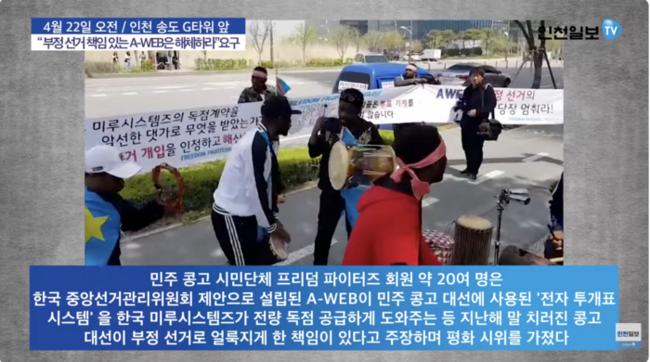 2019년 4월22일 인천 송도에 자리한 A-WEB 사무실 앞에서 콩고 국민들이 시위하고 있다. [인천일보 유튜브 캡처]
SCIF 게시물 원문
This isn't just happening in South Korea, this is worldwide. This is the global election fraud cartel. Allegations are mounting that Huawei technology has enabled Chinese, CCP-tied meddling in global elections, with hidden devices in ballot hardware, suspicious Wi-Fi signals hinting at hacks, and secret codes allegedly tilting results toward favored parties.
In South Korea's 2020 parliamentary vote and 2025 by-elections, activists called out these tactics, though officials dismissed them as baseless and pursued charges against the accusers.
Why? Because the they know they got caught by the people rigging the elections. People have caught on. The White House voiced broader concerns about Beijing's influence in 2025 U.S. polls, stopping short of direct Huawei ties.
Conservative critics in South Korea point to widespread fraud in the April 2024 National Assembly elections, blaming electronic glitches, mail-in ballot irregularities, and Chinese assistance for the ruling party's landslide. - Japan-forward
These claims echo Trump-era DOJ warnings that China, not Russia, poses the real threat to U.S. voting integrity. - CNN
Facebook axed China-linked pages targeting Trump and Biden, while a May 2020 study by University of Michigan's Walter Mebane flagged statistical anomalies in Korea's election, suggesting fraud could have swung outcomes, though critics argue his model overlooks local systems.
But this isn't isolated, it's part of a shadowy "election fraud cartel" orchestrated by global elites, leveraging interconnected tech firms to rig votes worldwide. In South Korea, Miru Systems, a key player tied to the Association of World Election Bodies (A-WEB), has exported voting tech plagued by failures. Miru's machines in Iraq's 2018 polls sparked fraud cries, manual recounts, and a warehouse fire, in DR Congo's 2018 and 2023 elections, they fueled "cheating machine" accusations amid deadly protests and bribery probes.
The same patterns and the same outcomes keep happening, and the people are noticing:
- U.S. 2020 Election:
Dominion/Smartmatic systems allegedly deleted/switched votes, ties to Venezuelan "Cartel del Sol" and Chinese hardware.
Baseless fraud claims fueled Jan. 6; no systemic evidence found.
- Brazil:
Miru-like tech sparked riots over rigged results.
Overturned elections, protests.
- Congo:
Miru glitches led to fraud allegations, violence.
Landslide wins questioned; international scrutiny.
- Iraq:
Miru machines prompted recounts, explosions.
Flipped winners; corruption probes.
- Taiwan:
China-backed disinformation via TikTok/YouTube.
Heightened interference in 2024 polls.
Chinese hidden Huawei tech has also been allegedly rigging Canadian votes in 2020 & 2025, to statistical fraud signals in South Korea's 2020 polls, echoing U.S. warnings on China over Russia as the real threat. Officials deny, but White House concerns & DOJ echoes grow. Is this the tip of a vast interference iceberg?
The Global Election Fraud Cartel has been connected to similar cases across borders. The allegations outlined in the query point to a pattern of sophisticated election interference attributed to Chinese state actors and affiliated entities, often involving technology, disinformation, and proxy influence. This network—sometimes dubbed the "election fraud cartel" in conspiratorial circles—refers to a loose coalition of authoritarian regimes, tech firms like Huawei, and elite proxies allegedly working to undermine democratic processes worldwide.
While many claims remain unproven or dismissed by officials, substantiated reports from intelligence agencies and inquiries reveal recurring tactics in multiple countries. These include electronic manipulation, statistical anomalies, disinformation campaigns, and economic coercion, often favoring pro-China candidates or disrupting anti-China voices. Below, I outline key similar cases, drawing from credible investigations and analyses for balance.
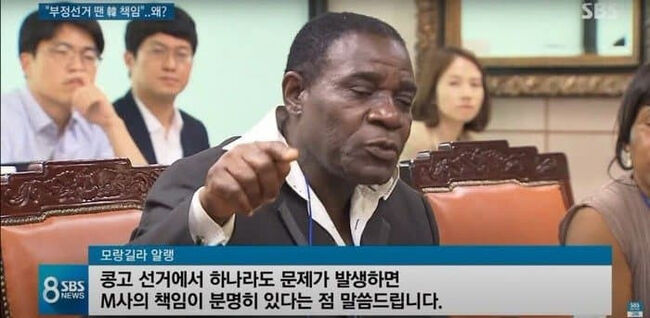 2018년 8월9일자 SBS뉴스 영상. [freezinenews.com/디씨갤 게시물 사진 캡처]
Canada has faced well-documented Chinese interference in its 2019 and 2021 federal elections, with tactics mirroring the query's Huawei-linked claims. A 2024 public inquiry found China clandestinely supported "pro-PRC" candidates through proxy agents, disinformation on platforms like WeChat, and intimidation of critics. While not directly implicating Huawei in ballot hardware, security concerns led to a 2022 ban on Huawei 5G equipment due to espionage risks.
Intelligence reports highlight "sophisticated strategies" like undeclared funding and media manipulation, potentially flipping ridings but not overall results. Officials like CSIS have called it a "danger to democracy," though Beijing denies involvement. This echoes the query's Wi-Fi hacking and secret codes claims, with activists facing complaints for disruptions, similar to how Canadian inquiries dismissed some media reports as partially incorrect while affirming broader threats.
U.S. allegations closely parallel the query, with Trump and DOJ officials claiming China poses a greater election threat than Russia. Declassified docs and whistleblowers allege massive fake ballots and IDs from China, tied to a global network including Serbia, Iran, and Venezuela. Facebook removed China-linked pages targeting Trump and Biden, spreading disinformation.
Recent shifts focus on local/state races, with Beijing cultivating politicians via economic ties and exploiting issues like immigration. Critics argue these claims fuel polarization, but intelligence warns of "information manipulation" as a top risk. This mirrors South Korea's electronic distortions and mail-in irregularities, with Huawei components allegedly in voting tech—though U.S. probes found no outcome-altering fraud.
This "cartel" dynamic involves CCP proxies and tech infiltration, akin to the query's hidden devices and favored parties. China's interference in Taiwan's elections is among the most aggressive, using disinformation farms, military drills, and economic pressure to sway outcomes against pro-independence parties like the DPP.
In 2018 local elections, Beijing funded proxies, spread fake stories via Weibo and Line, and intimidated candidates—leading to DPP losses. The 2024 presidential race saw tax probes on rivals, tariff suspensions, and balloon surveillance, all to fragment opposition. Taiwan ranks highest in foreign disinformation exposure, per V-Dem reports, with tactics like bot-driven narratives favoring unification.
Australia reports multiple instances of Chinese interference in federal and local elections, including funding Labor candidates and spying plots foiled by ASIO. In 2022, WeChat campaigns targeted anti-China politicians, echoing Canadian cases. Beijing uses diaspora influence to boost pro-CCP views, with economic retaliation (e.g., trade bans) pressuring voters. Similar to South Korea's Mebane study anomalies, Australian inquiries found statistical irregularities in some ridings, though dismissed as non-decisive.
A Global Pattern has emerged with other countries involved.
- New Zealand and Philippines: Intimidation and funding of pro-China candidates, with disinformation on social media.
- Cambodia and Malaysia: Economic incentives and proxy parties to install sympathetic regime.
- Africa (e.g., Zambia, Sierra Leone): Alleged vote-rigging via Chinese tech exports, though evidence is limited.
- Europe and South America: Cyber ops and media manipulation, per EU reports, often linked to Huawei infrastructure.
These cases suggest a coordinated "cartel" leveraging state tech giants like Huawei, united front work, and global elites.
This global cartel is fueled by giant taxpayer programs like USAID, NGOs, and elites, with ties to China (CCP), Iran, and Venezuela, uses shared source codes, overseas servers, and psychological ops to install puppets and erode democracy.
From Huawei's espionage tools to Miru's "glitchy" exports, to Dominion's remote access flipping votes, the elite playbook is clear. Control the count, control the country. If we don't dismantle it, free elections are history. Who's next? Demand transparency.
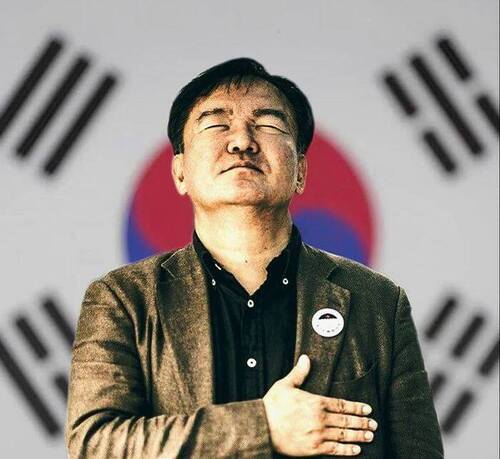 음모론자라는 갖은 비난과 압박에도 굴하지 않고 부정선거의 진실을 규명하는 하이브리드 전쟁의 최일선에서 헌신해 온 민경욱 전 국회의원. [민경욱 전 의원 페이스북 캡처]



 [팩트체크] 천궁 요격률 90%?… UAE 방공망이 보여준 미사일 전쟁의 현실
 美국무 "이란, 세계를 인질로…美, 압도적 힘으로 목표 달성중"
 국힘 "'尹복귀' 명백히 반대"…의원 전원 명의 결의문 채택
 '강북 모텔 연쇄살인범'은 20세 김소영…검찰, 신상 공개
 고려아연 주총 앞두고 'MBK·영풍 vs 고려아연' 연일 공방
 [WBC] 한국, 17년 만에 기적같은 8강 진출…'도쿄에서 마이애미로'
 [포토] “선관위원장 15인 CIA 신고 완료”… 서울역 집회 현장
 [영상] 경찰, 한미일보 압수수색 강제수사
 [사설] “집 팔아 ETF”… 대통령의 위험한 메시지와 주가 폭락
 목록
목록